What’s Underneath our Neighborhood?
What now looks like an unassuming industrial stretch between 31st St. and Karnes Blvd from north to south, and Mercier St. and Roanoke Rd. from east to west, once sat atop a hive of activity. The underground complex accessed near 31st and Mercier grew from late-1800s railroad work into a limestone mine, and ultimately into one of Kansas City’s earliest underground business parks.
The story starts in the 1870s, when railway contractors began boring what locals dubbed the “Magnificent Tunnel.” Funds dried up before the tunnel was finished, but the excavation was later expanded as a limestone mine.
Like most KC quarries, the mine followed the room-and-pillar method, leaving thick limestone pillars in a grid to hold up the roof—an approach widely used across the city’s undergrounds. The result was naturally temperate, dry spaces ideal for warehousing and archival storage. So when the limestone mine ceased commercial operations in the mid-to-late 1950s, it was already ideally set up for developer Lester Dean, Sr.’s plans for creating an underground business park.
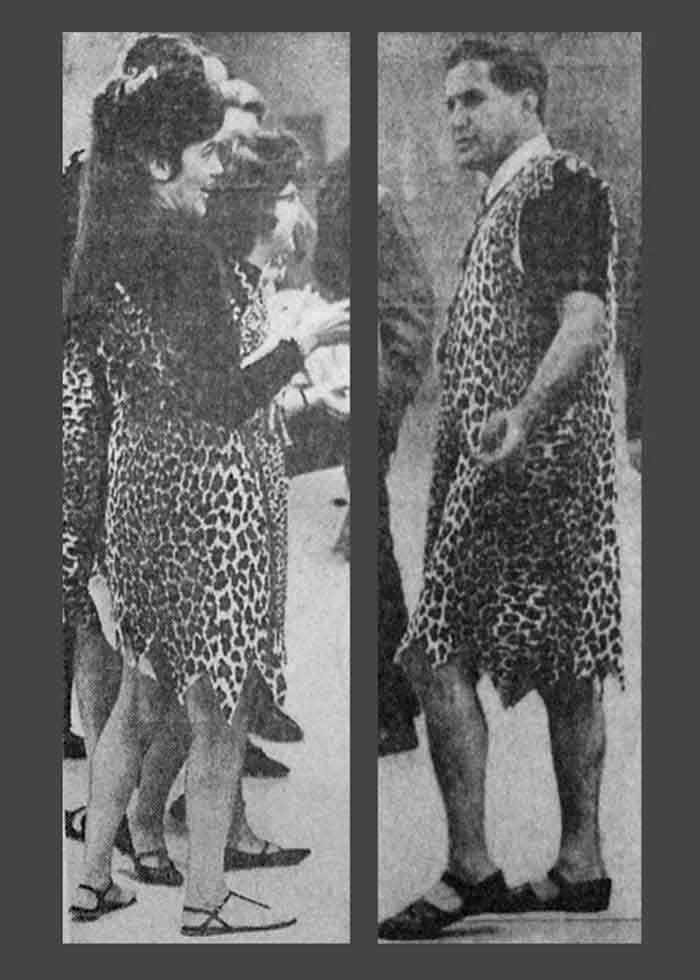
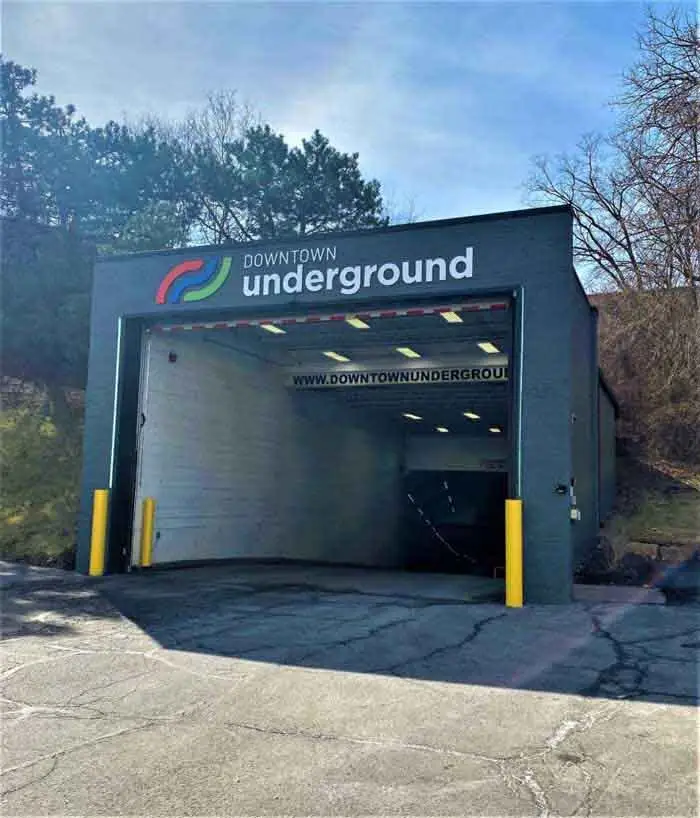
Dean began converting the worked-out spaces for commercial use, with early tenants arriving by 1961 and a formal opening in 1966, which was celebrated with a Flintstones-themed party. By the 1960s–70s the complex under 31st Street had grown into over one million square feet of leasable underground space.
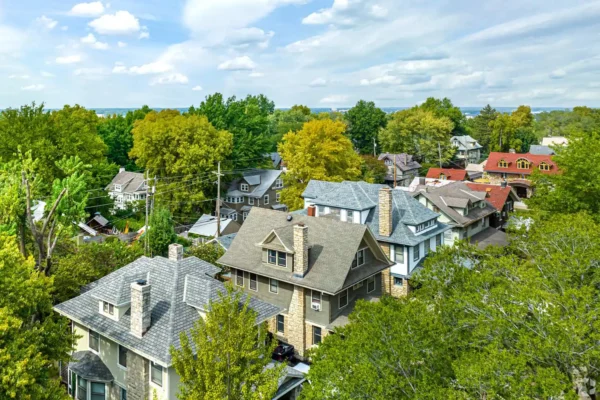
Geology is the reason it all worked. Kansas City sits atop thick beds of Bethany Falls Limestone, which was well-suited for constructing commercial and residential buildings and streets. Many of Coleman Highlands’ own homes are built with this very limestone. Named after the town of Bethany, Missouri, geologists describe the limestone shelf as anywhere from 15–30 feet thick and hundreds of miles in length.
Because of the thickness and homogeneity of the stone shelf, subterranean mining allowed for materials extraction without much structural impact to the topography of the area. This left behind extensive underground systems that were perfect for climate controlled storage and even offices. For instance, UMKC’s Repertory Theatre uses the Downtown Underground for storage of costumes and set pieces and the Department of Homeland Security uses some Kansas City area underground “caves” for Federal Records Center Offices.
Though people often say the mines “used to be” there, the spaces still exist — they’ve just been repurposed. “Dean’s Downtown Underground,” remains in use beneath our neighborhood but is now operated by Copaken Brooks and Absolute Storage Management. It’s been rebranded and renamed to Smart Storage KC and continues to offer self-storage, warehouse, fulfillment center, meeting, and business spaces for individuals and businesses.▪